
Smishing: What It Is and How to Recognize SMS Scams in 2026
Contents:
Contents:
An SMS message from a bank, delivery service, or government agency rarely looks suspicious on its own. Fraudsters take advantage of that: they copy the style of a familiar company, add a link, and try to pressure the recipient into taking action quickly.
This type of fraud is called smishing—phishing through SMS and other text messages. Its goal is to steal a password, card information, a one-time code, or redirect the recipient to a fake website.
In 2026, spelling or grammar mistakes are no longer enough to identify a scam. Ukraine’s Cyber Police warns that fake pages can copy the colors, logos, photos, and content of legitimate government websites.
What Smishing Looks Like
A typical smishing attempt starts with a message that demands a quick response:
- “We couldn’t deliver your package”
- “Your card has been temporarily blocked”
- “Confirm your benefit payment”
- “Pay your outstanding balance today”
The recipient is then asked to click a link, call a phone number, or reply to the SMS.
Sign #1: They Pressure You to Act Quickly
“Urgent,” “within one hour,” “final warning,” and “today only” are phrases designed to make the recipient act before checking whether the message is legitimate.
Ukraine’s Cyber Police specifically recommends being cautious with messages that create a sense of urgency. The UK’s NCSC also identifies pressure, fear, authority, and scarcity as common tactics used by scammers.
If the SMS claims to be from a bank, delivery company, or government service, do not use the contact information provided in the message itself. Open the official app or website separately and verify the information there.
Sign #2: The Link Looks Suspicious
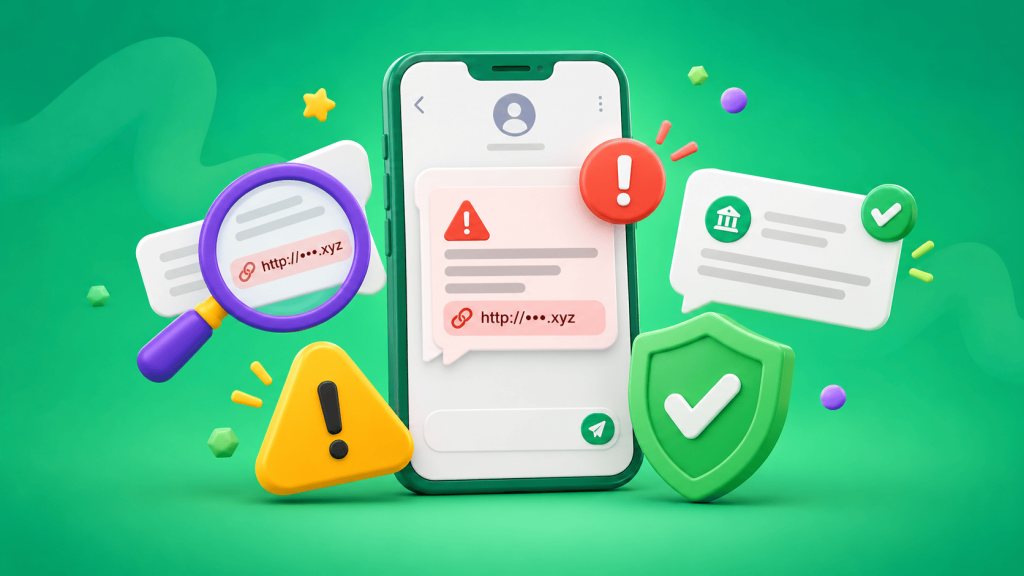
A phishing website often tries to look almost identical to the real one. The domain may include the brand name, look-alike characters, or additional words designed to make the address appear legitimate at first glance.
It is better not to open an unexpected link from an SMS at all. Access the service through its official app or open the website yourself.
Ukraine’s Cyber Police recommends checking the website address before entering personal information and never submitting passwords or banking details on third-party websites.
Sign #3: They Ask for a Code or Card Information
One of the most dangerous requests is to enter a card number, PIN, online banking password, or one-time code received by SMS.
In January 2026, CSIRT-NBU identified a phishing scheme involving a fake “Winter eSupport” program. The fraudulent pages imitated banking services and asked users for their card number, PIN, and one-time code. The information was then used to gain access to bank accounts.
If you receive a code for a transaction you did not initiate, do not share it with anyone.
Is Checking the Sender Enough?
A familiar sender name in your SMS inbox is a useful signal, but it should not be your only check.
Companies use an alphanumeric Sender ID so customers see a recognizable sender name instead of a random phone number. With SMS Club, these sender names are registered for bulk messaging.
However, you should evaluate the entire message: were you expecting it, does the text match an action you actually took, and where does the link lead? Any unexpected request for sensitive information should be verified through the company’s official channel.
What Changed in 2026
Grammar mistakes are no longer a reliable indicator. The NCSC notes that modern scam messages have become more convincing and harder to recognize.
Throughout 2026, Ukraine’s Cyber Police reported fake resources using the branding of government services, as well as scammers impersonating government employees and creating a false sense of urgency.
That means the key is not the quality of the writing, but the scenario itself: were you expecting the message, did you actually perform the action mentioned, and does the website address match the official domain?
What to Do With a Suspicious SMS
Do not reply and do not open the link. If the message claims to be from a bank, retailer, or delivery service, find the company’s official contact information yourself.
Google Messages includes automatic spam and phishing protection. You can also manually report a suspicious conversation as spam and block the sender.
If you already entered a password on a suspicious website, change it immediately. If you shared card information or a banking OTP, contact your bank right away using its official phone number or app.
What Businesses Should Do
Brands also influence how easily customers can tell legitimate messages from fake ones.
Use a consistent, recognizable sender name, clearly explain why the SMS was sent, and avoid training customers to trust messages such as “Urgent—click this link now.”
It is also helpful to explain in advance what information your company will never request by SMS. The clearer your official communication rules are, the easier it is for customers to recognize suspicious messages.
Frequently Asked Questions
What is smishing in simple terms?
Smishing is phishing through SMS or other text messages. A scammer pretends to be a familiar company or institution in order to steal a password, banking information, a one-time code, or send the recipient to a fake website.
How can I verify an SMS from a bank or delivery service?
Do not use the link or phone number provided in a suspicious SMS. Open the official app, type the company’s website address yourself, or find the contact information on the official website and verify the message through that channel.
Do spelling mistakes mean an SMS is a scam?
Mistakes can still be a warning sign, but a message without mistakes is not necessarily legitimate. Modern phishing messages can look polished, so it is more important to check the domain, the reason for the message, and what information you are being asked to provide.
What should I do if I already opened the link?
If you did not enter any information, close the page. If you entered a password—change it. If you provided card details or a one-time banking code, contact your bank immediately through an official channel.