How to Win Back Inactive Customers Without Constant Discounts: Reactivation Scenarios Using SMS, Viber, and Chatbots
Contents:
Contents:
Every company knows the situation when a customer stopped buying several months ago. The simplest solution may seem to be sending a promo code and waiting for an order. It may work once, but if every win-back starts with a discount, the customer quickly gets used to buying only when the price is lower.
That is why customer retention should not be built only on promotions. Often, there is already a reason to return: the product is running out, it is time for a repeat appointment, bonuses have accumulated, or the customer did not complete a previous action. The company’s task is to remind the customer at the right time and choose the right channel.
First, Define Who Is Inactive
Inactivity means different things for different companies. For a coffee shop, one month without a purchase is a long time. For an electronics store, it may be completely normal for a customer not to place a new order for six months.
That is why the rule “has not purchased in 90 days” should not be applied to the entire customer base. It is better to focus on the normal repeat purchase cycle for a specific product or service.
Separately segment customers who have not purchased for a long time, stopped responding to messages, or dropped off at a specific stage: abandoned a cart or did not complete a booking.
Do Not Start With a Discount
The first message should give the customer a reason to return, not just a lower price.
For a cosmetics store, this could be a reminder about a product that may need to be replenished. For a service center, it could be scheduled maintenance. For a salon, a repeat appointment. For an online store, a product left in an abandoned cart.
Rakuten Viber recommends using personalization and segmentation, while Business Messages can be used for messages based on customer data.
It is better to save the discount for the next step if the previous messages do not bring the customer back.
What Role Should SMS and Viber Play?
SMS is convenient for short messages tied to a specific event: a repeat appointment, the expiration of bonuses, or an incomplete order.
Viber gives you more room to explain: you can add an image, a button, a link, and longer text to the message. SMS Club also offers a Viber + SMS cascade: if the Viber message is not delivered, the system sends an SMS.
You should not immediately duplicate the same text in both channels. It is better to define the main channel and the condition for using the backup channel.
Where to Use a Chatbot
A chatbot is needed when, after receiving a message, the customer has to do something: choose a product, check bonuses, book an appointment, clarify a status, or answer a few questions.
For example, Viber reminds the customer about a repeat order, and the bot immediately offers a choice: “Repeat,” “Change product,” or “Ask a question.”
At SMS Club, chatbots integrate with CRM and other systems, so the scenario is connected to data about requests, orders, and customer statuses.
Build Reactivation in Several Steps
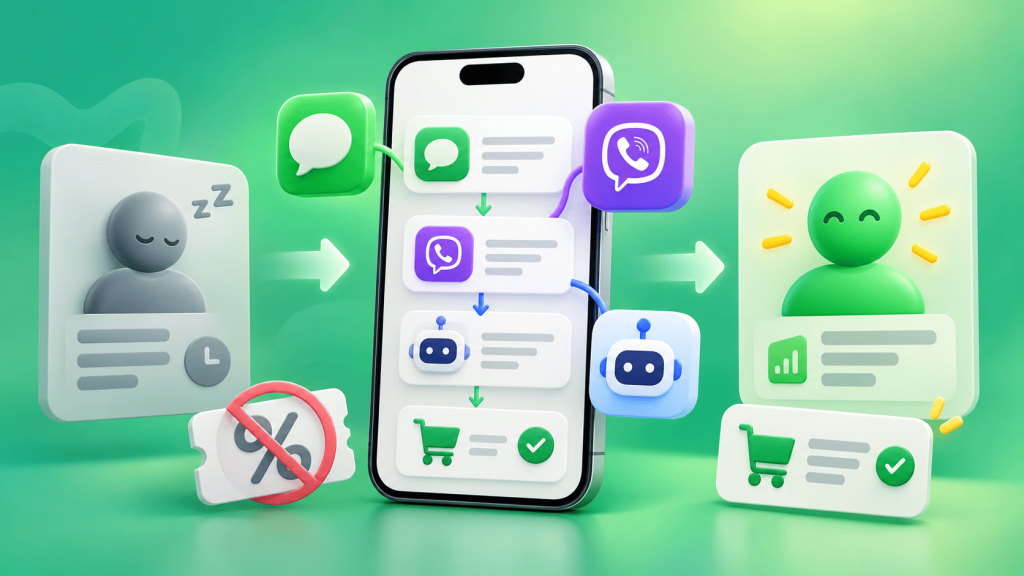
Instead of one mass message, it is better to set up a sequence.
The first contact is a useful reminder without a discount. The second is another argument: a new product, assortment update, bonuses, or the ability to quickly repeat the previous action. The third can include a personalized offer if it makes economic sense.
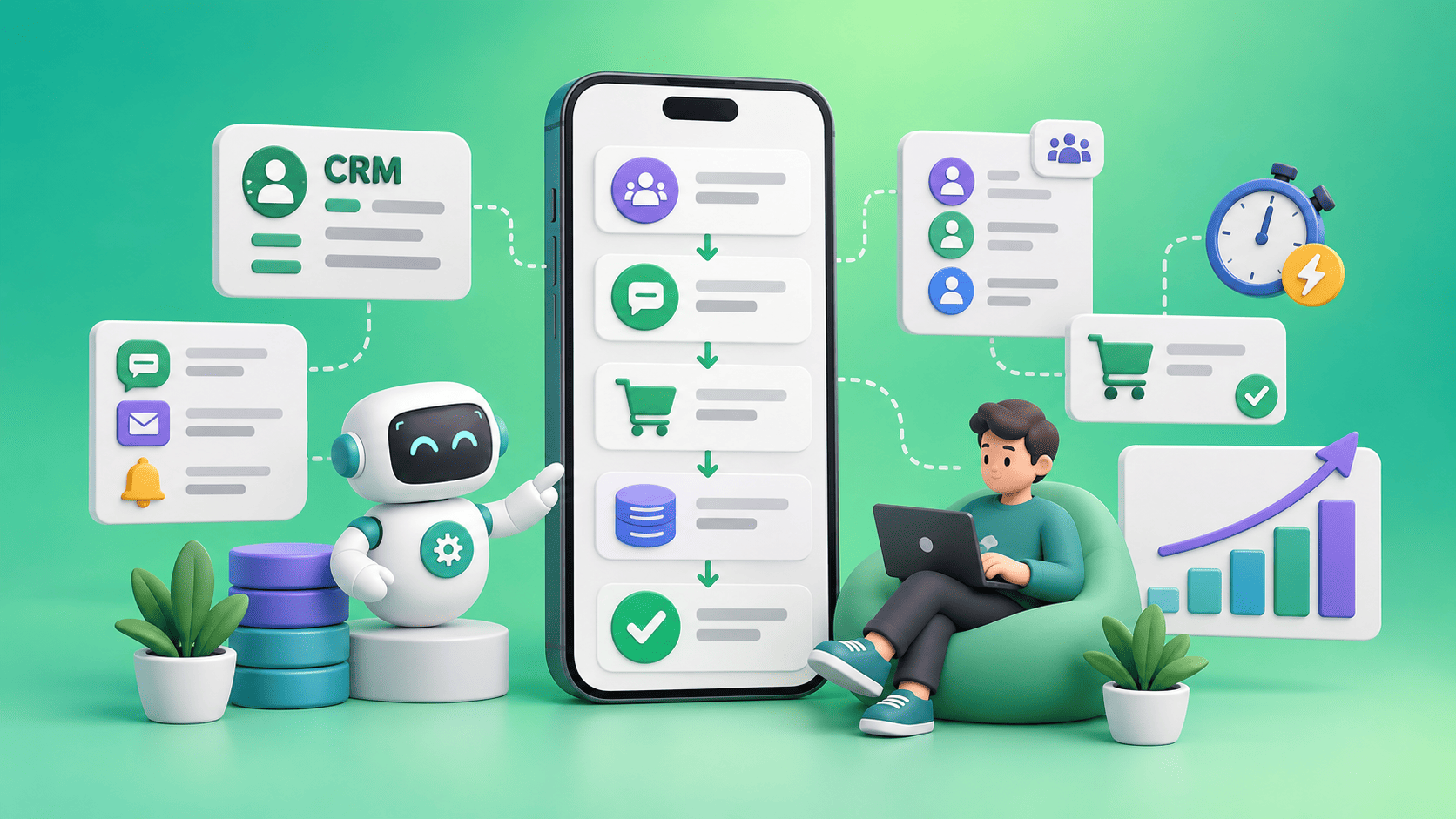
For example: 60 days without a purchase → Viber reminder → no response → SMS a few days later → transition to a chatbot → repeat order or handoff to a manager.
The timing and number of contacts depend on the purchase cycle. If a customer buys a product once every six months, three messages in one week will look intrusive.
Do Not Win Everyone Back the Same Way
A customer who used to buy every month and suddenly disappeared is more important for reactivation than a contact with one random order two years ago.
It is better to segment the base by purchase frequency, average order value, date of the last order, and response to previous messages.
If the customer has already returned, the next messages in this sequence should stop automatically. Otherwise, the customer will receive an offer to “come back” after making a new purchase.
What to Track After Launch
Opens and clicks show the response to the message, but the final goal is a repeat purchase.
Track how many inactive customers returned, how much revenue they generated, and how much the communication cost.
SMS Club shows Viber message delivery and read rates, and through the API, sending data can be connected to a CRM or website.
If reactivation works only after a large discount, the scenario should be reviewed. The win-back should start with a relevant reason to contact the customer, not with a constant price reduction.
FAQ
How Much Time Should Pass Before a Customer Is Considered Inactive?
There is no single timeframe. Focus on the normal repeat purchase cycle in your category. If the product is usually purchased every month, 90 days is already meaningful. For electronics or expensive services, that period may not mean anything.
How Many Messages Are Needed for Reactivation?
Start with a short sequence of two or three contacts with pauses between them. Each message should have its own reason: a reminder, useful information, or a personalized offer, instead of repeating the previous text.
Is It Necessary to Give an Inactive Customer a Discount?
No. First, use reasons connected to the previous purchase: a repeat order, appointment, bonuses, product update, or incomplete action. Save discounts for segments where they truly pay off.
How Do You Know Whether a Reactivation Scenario Is Working?
Track not only reads and clicks, but also the share of customers who returned to purchase, the revenue they generated, and the cost of communication. Compare different segments and scenarios over the same period.